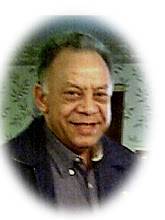
Dr. Wendell Cantrell has kindly allowed me to publish an article he wrote for CVM Outreach Herald, February 2011.
Thus says the LORD, "Stand by the ways and see and ask for the ancient paths, Where the good way is, and walk in it; And you will find rest for your souls. But they said, `We will not walk in it.' (Jeremiah 6:16)Balance with technologyIn the 21st century this will be one of the hardest issues we wrestle with. In the last ten years I have become much more of a history buff. The following snippet caught my attention as it relates to our brave new world.In the 18th century, the shipping industry was taking travelers to an exciting new world. Lord Admiral Nelson commented, “Beyond Gibraltar every man is a bachelor.” Sailors were leaving the known world where morality and accountability were tied to visibility with friends and family being seen every day and lifetime travel no further away than the next village. Heading past Gibraltar there was no visibility, unhindered freedom, and little personal accountability. John Newton, the famous hymn writer experienced this world on a slave ship and would later write, “Amazing grace, how sweet the sound that saved a wretch like me.”We are going to explore how we can be a wizard or a restless wretch with the same technology, based on personal choice. Let’s examine some statistics from our new frontier (Kaiser Family Foundation): • The average user spends 7.5 hours per day outside work with new media (I-pod, TV, laptop, cell phone).• Facebook users now number 500 million (not bad for a 19 year old Harvard sophomore developing the idea on a white board in his dorm room). It would be the third largest country in the world, were it real. Users make 60 million updates daily, with the average user spending one hour networking. • Texting among 18-24 year olds has more than doubled in the past 2 years from 600 per month to 1400 per month. There is growing tension between parents and teens over texting vs. talking. To many teens, a call seems rude and intrusive.So is social media the good way? Our theme verse for 2010 speaks of asking where the good way is. Certainly, it can be a good way, but let us examine briefly four ways that our hypersocialized culture** is affecting time- tested disciplines necessary for our relationships, our walk with the Lord, and our rest.• Reading. When was the last time you read a book cover-to-cover? When we are on the internet, we enter an environment that promotes cursory reading, distracted thinking, and superficial learning. The web is chipping away at our concentration and contemplation. We are now finding it harder to stay focused through long stretches of prose. • Silence. The soul needs silence. In silence we hear ourselves and we hear God. My soul waits in silence for God only… (Ps 62:1, 5). If you are not, please consider unplugging for your daily quiet time.• Accountability. In simpler times, morality and accountability were tied to visibility. In the 21st century it is far too easy to be invisible. We need personal as well as family accountability rules. Spouses and parents should have access to any online account. Would you be surprised if I told you that one third of the couples seeking help from our reconciliation ministry have issues with one of the spouses reconnecting on Facebook or other social networking site with an old friend? • Focus, concentration, and meditation. I will meditate on all Your work And muse on Your deeds. (Ps 77:12, 119:15). The average computer user changes screens 37 times per hour. Is the myth of multitasking robbing us of the time to set our mind on heavenly things?Please don’t jump to the conclusion that the author is a nostalgist focused purely on the good old days. There are certainly opportunities with our new technology and we can discuss those another time.
What are a few helps in balancing the digital life with real faces and feet?
1. Turn it off (at least for periods of time). Radio, TV, Computer, Cell phone, I Pod. We need to seriously redefine what is urgent and what can wait. 2. Screen the news. Certainly keep abreast of hard news, but Pop Culture?? Do we really need daily updates on the lives and ordeals of fallen celebrities?3. Get away for a silent retreat. It might be for a weekend, a day, or a half day. Take just your Bible and journal and listen to God alone.
Congratulations on finishing this article. The world is trying its very best to conform us into the secular pattern of media addiction and constant distraction. As we say no to this pressure, the world will take note and we’ll find rest for our souls.
RECIPES FOR REST:1. Eat dinner as a family at least three nights a week.2. Give each family member a hug for 21 days in a row (long enough to form a habit).3. Spend an evening going through old photos of special family events.4. Praise a family member in front of someone else.Next month we will look at the essential of managing our expectations.*Ideas for this series based on “Little House on the Freeway” by Tim Kimmel ** Christianity and our hypersocialized generation www.albertmohler.com
Friday, February 18, 2011

Saturday, January 29, 2011
OF KINGS AND KINGDOMS
1 Judges 21:24 – In those days Israel had no king…
Psalms 24:7-10 – Who is the King of Glory? The Lord God Almighty
Zachariah 9:9 – Rejoice, your King comes!
John 19:33 – Are you a King?
John 19:14-15 – Behold your King. We have no King!
Isaiah 2:2-4 – The Mountain of the Lord
As we look back through the history of Israel we are reminded in the Book of Judges of the evil and chaos that comes with no king. When every man does what he sees fit, when there is no authority or rule, the result is always the same: always chaos!
Kingdoms need kings. This is true for all ages and for all kingdoms, not just for political ones. The family is a kingdom, and a very important one, since it’s the foundation upon which all political kingdoms are built. Without families there are no nations.
When Christ came, He established His kingdom, and we call Him the King of Kings and Lord of Lords, because that is precisely what He is. There is no kingdom or king that is not subject to Him. He is master of all His creation, which is everything in the universe. He is also the King of Peace. As it says in Isaiah 2: when His mountain is established, there will be peace. There is no war within the walls of His Kingdom. There is no torment, or destruction, or evil in His Kingdom.
Nations that kneel to the Kingship of Christ prosper in peace; while those that do not are suffer through every sort of calamity including war.
This is the reason that Israel has never had peace, and will never have peace, because they have rejected the King. And the US and Europe, as they drift away from Christ, will also drift into all sorts of torments. Why? Because of rebellion against the King of Peace.
And, just as this is true with a nation, a home without a king will end in chaos and evil. Only a home where Christ is King will see and feel peace. The simplest way to tell if Christ is the King of a house is to see if there is peace among the members of this household. God doesn’t promise money, or health, but he promises peace and such that transcends understanding.
But the idea of kingship is foreign and opposed to us nowadays. As Americans we love democracy and individualism, and hate the idea of a king. We have never as a nation had, or will ever have one. Our first war was against the rule of a king. We are our own kings, controlling even those who rule over us (or so we think). When asked, we will quickly acknowledge that Christ is King, but we somehow see Him a far off king. He’s over there, somewhere in heaven, as we point to the sky. We don’t like the notion that He is actually ruler over us, or that we must subject all to Him.
As men we call ourselves the kings of our castle, but the fact is that we are not. We are stewards, caring for and watching over for the rightful King. We didn’t earn our home, or our wife, or our kids, gifts, talents, or money. The King of our home entrusted it to us to care for and manage wisely until He returns and calls us to give an account.
As we realize this, the first thing we must do is look at where we are sitting. Quite possibly we are sitting in the King’s seat, thinking it was meant for us.
I address this to the men because, although it falls on everyone to bend their knee to our King and Savior, the role of steward falls on the men of the house, as men represent Christ while our brides represent the Church and our children are the Faithful. Christ is King over the Church, and so we are the stewards of the King over our family.
Our children's greatest confessions to us are for being disobedient, and our most frequent discipline toward them has to do with obedience. We would do well to subject ourselves in the same way to our Father, our King.
To illustrate: my son doesn’t choose his punishment. He chooses his actions, and I choose the punishment. Sometimes he gets mad at me because he feels the punishment is unfair. He wants a different punishment, but he doesn’t understand the severity of what he does or the long term consequences of his behavior, which accounts for a large part of the reasoning behind the punishment we choose for him.
Likewise we sometimes feel that the struggles in life are the result of some unfair treatment by God, or worse, that they are out of his control and he either doesn’t know what’s going on, or can’t do anything about it.
If this were true, God wouldn’t be God, much less a King. In our frustrations we turn the Lord God Almighty, Creator of Heaven and Earth, into the equivalent of those foolish and impotent Greek or Roman gods. But He is not a stone god who cannot see what is happening, or do anything about it. He is All Knowing, so we know He is aware of what’s going on, All Loving, which means He wants nothing but the best for us, and All Powerful, which means He has the means to provide us with what we need. This is a true King. This is the King of Glory, the Lord God Almighty.
It is us who think ourselves capable to pass judgment on the circumstances God places us in. We seem to think we can discern when something is fair or not, or even when something is bad or not. We call suffering bad, although the Bible is clear that suffering produces wisdom, and we all want wisdom. We call poverty bad, although Christ clearly stated that those who are poor even down to their spirit are blessed. We think the fence that we encounter is unfair because it keeps us caged in, but fail to see all the evil that same fence is keeping out.
It is good for God to be King. It is good to have an Almighty King, Even better to have one who places mercy above justice, and love over sins. Behold your King.
Our communion is a remembrance not of a good man, or a prophet, or a sage or a saint. We take the bread and the wine to remember our King. As we do so, we must be true. This is why it is so good to bend our knee as we take it. It represents the blood of our King, the ransom paid for our freedom, and the body of our Lord, the food that sustains us.
Is he King? Yes, he is King. The true question is: are we subjects or rebels.
Philippians 4:7 is a great reflection of what His kingship will look like and produce in our life: A peace that transcends all worldly understanding.
Submitted by Marco A. Andrino
Psalms 24:7-10 – Who is the King of Glory? The Lord God Almighty
Zachariah 9:9 – Rejoice, your King comes!
John 19:33 – Are you a King?
John 19:14-15 – Behold your King. We have no King!
Isaiah 2:2-4 – The Mountain of the Lord
As we look back through the history of Israel we are reminded in the Book of Judges of the evil and chaos that comes with no king. When every man does what he sees fit, when there is no authority or rule, the result is always the same: always chaos!
Kingdoms need kings. This is true for all ages and for all kingdoms, not just for political ones. The family is a kingdom, and a very important one, since it’s the foundation upon which all political kingdoms are built. Without families there are no nations.
When Christ came, He established His kingdom, and we call Him the King of Kings and Lord of Lords, because that is precisely what He is. There is no kingdom or king that is not subject to Him. He is master of all His creation, which is everything in the universe. He is also the King of Peace. As it says in Isaiah 2: when His mountain is established, there will be peace. There is no war within the walls of His Kingdom. There is no torment, or destruction, or evil in His Kingdom.
Nations that kneel to the Kingship of Christ prosper in peace; while those that do not are suffer through every sort of calamity including war.
This is the reason that Israel has never had peace, and will never have peace, because they have rejected the King. And the US and Europe, as they drift away from Christ, will also drift into all sorts of torments. Why? Because of rebellion against the King of Peace.
And, just as this is true with a nation, a home without a king will end in chaos and evil. Only a home where Christ is King will see and feel peace. The simplest way to tell if Christ is the King of a house is to see if there is peace among the members of this household. God doesn’t promise money, or health, but he promises peace and such that transcends understanding.
But the idea of kingship is foreign and opposed to us nowadays. As Americans we love democracy and individualism, and hate the idea of a king. We have never as a nation had, or will ever have one. Our first war was against the rule of a king. We are our own kings, controlling even those who rule over us (or so we think). When asked, we will quickly acknowledge that Christ is King, but we somehow see Him a far off king. He’s over there, somewhere in heaven, as we point to the sky. We don’t like the notion that He is actually ruler over us, or that we must subject all to Him.
As men we call ourselves the kings of our castle, but the fact is that we are not. We are stewards, caring for and watching over for the rightful King. We didn’t earn our home, or our wife, or our kids, gifts, talents, or money. The King of our home entrusted it to us to care for and manage wisely until He returns and calls us to give an account.
As we realize this, the first thing we must do is look at where we are sitting. Quite possibly we are sitting in the King’s seat, thinking it was meant for us.
I address this to the men because, although it falls on everyone to bend their knee to our King and Savior, the role of steward falls on the men of the house, as men represent Christ while our brides represent the Church and our children are the Faithful. Christ is King over the Church, and so we are the stewards of the King over our family.
Our children's greatest confessions to us are for being disobedient, and our most frequent discipline toward them has to do with obedience. We would do well to subject ourselves in the same way to our Father, our King.
To illustrate: my son doesn’t choose his punishment. He chooses his actions, and I choose the punishment. Sometimes he gets mad at me because he feels the punishment is unfair. He wants a different punishment, but he doesn’t understand the severity of what he does or the long term consequences of his behavior, which accounts for a large part of the reasoning behind the punishment we choose for him.
Likewise we sometimes feel that the struggles in life are the result of some unfair treatment by God, or worse, that they are out of his control and he either doesn’t know what’s going on, or can’t do anything about it.
If this were true, God wouldn’t be God, much less a King. In our frustrations we turn the Lord God Almighty, Creator of Heaven and Earth, into the equivalent of those foolish and impotent Greek or Roman gods. But He is not a stone god who cannot see what is happening, or do anything about it. He is All Knowing, so we know He is aware of what’s going on, All Loving, which means He wants nothing but the best for us, and All Powerful, which means He has the means to provide us with what we need. This is a true King. This is the King of Glory, the Lord God Almighty.
It is us who think ourselves capable to pass judgment on the circumstances God places us in. We seem to think we can discern when something is fair or not, or even when something is bad or not. We call suffering bad, although the Bible is clear that suffering produces wisdom, and we all want wisdom. We call poverty bad, although Christ clearly stated that those who are poor even down to their spirit are blessed. We think the fence that we encounter is unfair because it keeps us caged in, but fail to see all the evil that same fence is keeping out.
It is good for God to be King. It is good to have an Almighty King, Even better to have one who places mercy above justice, and love over sins. Behold your King.
Our communion is a remembrance not of a good man, or a prophet, or a sage or a saint. We take the bread and the wine to remember our King. As we do so, we must be true. This is why it is so good to bend our knee as we take it. It represents the blood of our King, the ransom paid for our freedom, and the body of our Lord, the food that sustains us.
Is he King? Yes, he is King. The true question is: are we subjects or rebels.
Philippians 4:7 is a great reflection of what His kingship will look like and produce in our life: A peace that transcends all worldly understanding.
Submitted by Marco A. Andrino
Sunday, January 23, 2011
LIVING WITH THE ENEMY
The most important function of the church is to train and equip the saints with the armour of God, Christians, who as His stewards exercise dominion of His creation and disciple the nations.
All spaces or spheres of government that we neglect are rapidly usurped by Satan and his hosts. Our deplorable attitude has allowed previously christian societies to become immersed in moral, spiritual and material misery.
How can this situation be changed? By changing our attitude and exercising dominion of ourselves, our families, our churches, our civil governments and by rebuking sin. It is our obligation to proclaim the truth where sin prevails. We must infiltrate the enemy's forces and change the perspective of unbelievers. We can no longer live and act like chameleons, mimicking and accepting evil or sin, afraid of being discovered as Christians. It is God's decision to have the Church as well as each one of us where we are, even if it is in front of Satan's Throne. Where sin reigns is where God is most needed.
We must remember that Jesus Christ is the Way, the Truth and the Life. He is our ticket to salvation and Paradise.
All spaces or spheres of government that we neglect are rapidly usurped by Satan and his hosts. Our deplorable attitude has allowed previously christian societies to become immersed in moral, spiritual and material misery.
How can this situation be changed? By changing our attitude and exercising dominion of ourselves, our families, our churches, our civil governments and by rebuking sin. It is our obligation to proclaim the truth where sin prevails. We must infiltrate the enemy's forces and change the perspective of unbelievers. We can no longer live and act like chameleons, mimicking and accepting evil or sin, afraid of being discovered as Christians. It is God's decision to have the Church as well as each one of us where we are, even if it is in front of Satan's Throne. Where sin reigns is where God is most needed.
We must remember that Jesus Christ is the Way, the Truth and the Life. He is our ticket to salvation and Paradise.
CONVIVIENDO CON EL ENEMIGO
La función mas importante de la iglesia es indoctrinar, preparar y equipar a sus santos, es decir a los cristianos, con todo el armamento de Dios y estos, como sus mayordomos, ejercer dominio de su creación y dicipular a las naciones.
Todo espacio o esfera de gobierno que negligentemente desatendemos es rapidamente usurpado por las huestes de Satanás. Nuestra deplorable actitud ha permitido que sociedades anteriormente cristianas ahora viven inmersas en pecado y miseria moral, espiritual y material.
¿Como podermos cambiar esa situación? Cambiando de actitud y prepararnos para ejercer dominio de nosotros mismos, nuestras familias, nuestras iglesias y nuestro gobierno civil, sin contemporizar con el pecado. Nuestra obligación es proclamar la verdad donde abunda el pecado. Cada uno debe infiltrar su contorno y con inteligencia y discernimiento cambiar la perspectiva de los que no conocen a Dios. Ya no podemos continuar actuando como camaleones, imitando, aceptando y contemporizando con el enemigo por temor a que descubren que somos cristianos. Por decisión de Dios la iglesia y cada uno de nosotros estamos donde El quiere que estemos aunque sea frente al Trono de Satanás. Donde abunda el pecado es donde más se necesita a Dios. Recordemos que Jesucristo es El Camino, La Verdad y La Vida. El es el boleto para nuestra salvación y el paraíso.
Todo espacio o esfera de gobierno que negligentemente desatendemos es rapidamente usurpado por las huestes de Satanás. Nuestra deplorable actitud ha permitido que sociedades anteriormente cristianas ahora viven inmersas en pecado y miseria moral, espiritual y material.
¿Como podermos cambiar esa situación? Cambiando de actitud y prepararnos para ejercer dominio de nosotros mismos, nuestras familias, nuestras iglesias y nuestro gobierno civil, sin contemporizar con el pecado. Nuestra obligación es proclamar la verdad donde abunda el pecado. Cada uno debe infiltrar su contorno y con inteligencia y discernimiento cambiar la perspectiva de los que no conocen a Dios. Ya no podemos continuar actuando como camaleones, imitando, aceptando y contemporizando con el enemigo por temor a que descubren que somos cristianos. Por decisión de Dios la iglesia y cada uno de nosotros estamos donde El quiere que estemos aunque sea frente al Trono de Satanás. Donde abunda el pecado es donde más se necesita a Dios. Recordemos que Jesucristo es El Camino, La Verdad y La Vida. El es el boleto para nuestra salvación y el paraíso.
Tuesday, December 28, 2010
THE FAITH OF A PROPHET
-Marco Andrino
After John’s messengers left, Jesus began to speak to the crowd about John: “What did you go out into the wilderness to see? A reed swayed by the wind? If not, what did you go out to see? A man dressed in fine clothes? No, those who wear expensive clothes and indulge in luxury are in palaces. But what did you go out to see? A prophet? Yes, I tell you, and more than a prophet. This is the one about whom it is written:
“‘I will send my messenger ahead of you, who will prepare your way before you. Think about this: Take John the Baptist to represent our faith, since after all he is the messenger sent to prepare the way for Jesus and our faith if the vehicle through with the message of Christ goes out to the world. When they went out to the wilderness they didn't see a reed swayed by the wind, in other words they didn't go find someone whose faith was shaped by external circumstances or social pressures. And they didn't find someone dressed in fine clothes, for our faith is not based on external adornments, or consumed with the things that are of value to the world. What they found was a man who was unshakable and uncompromising, a wild man who was so magnetic that people left the comfort of their town to venture into the wilderness to see him. What does our faith look like? To answer that we must first clarify what our faith is in.
What does faith look like when it’s in something temporal, like career, family, money, etc? The story of Job gives us a clear picture of the fleeting nature of all things of the world. Putting your faith in them is like hammering a stake into sand. They are unreliable by their very nature because they are subject to outside variables which can destroy them. This faith will look like the reed in the wind.
What does faith look like when it’s in our knowledge and understanding, abilities or talents? I am the master of my own destiny, the captain of my own ship. Through my own strength, skill, and knowledge I will work my way to heaven. Take a lesson from King Nebuchadnezzar, who was contemplating how great he was when God struck him down and left him eating grass like an ox. He lost his sanity until he repented of his pride and humbled himself to God. You see, this faith is also like a reed in the wind.
What does faith look like when it’s in our faith? By this I mean, our religious traditions, like our church services, discipleship partners, d-times, bible talks, sharing of our faith, the Sunday sermon, the church leadership, and our Sunday attendance. This kind of faith is the most dangerous because it has the appearance of Godliness, but is not God. Consider this analogy: to combat a strong virus, we inject ourselves with a weak version of the same virus. This creates antibodies which will immunize us from both the weak and the strong. When we replace the true God for a weak semblance of Him, we run the danger of numbing ourselves to both the weak version and the true God.
Consider the words of Christ in Matthew 7:22-23: Many will say to me on that day, ‘Lord, Lord, did we not prophesy in your name and in your name drive out demons and in your name perform many miracles?’ Then I will tell them plainly, ‘I never knew you. Away from me, you evildoers!’
This too is like a reed in the wind.
*******
So what does faith look like when it’s in Christ? For this we should first describe who Christ is:
John 14:6 Jesus answered, “I am the way and the truth and the life. No one comes to the Father except through me.
Jesus calls himself the way, meaning the way to the father, which is the only way that matters. Just like when we stand before God in Judgment there will only be one evaluation: “were we Disciples of Christ?” so here on earth there is only one way that matters, the way of Christ. The path he has laid, and the life he has called us to.
He is also the truth, and truth by its very nature is not subject to change. It’s immovable. Like anchoring your tent stake to an iron ring, you can have full confidence in it. Christ is truth because Christ is God, never changing, and always victorious, all powerful, all knowing, and all loving. Who can stand against the Lord?
Christ is also the life. He can say this because he is the essence of life and the creator of all life. Separation from God is death. This is why all men instinctively fear death, because we are created in the image of God and God is life.
This type of faith is the faith of a prophet. This is the faith that makes those around us stop and take notice. In the words of King David in Psalm 18:
After John’s messengers left, Jesus began to speak to the crowd about John: “What did you go out into the wilderness to see? A reed swayed by the wind? If not, what did you go out to see? A man dressed in fine clothes? No, those who wear expensive clothes and indulge in luxury are in palaces. But what did you go out to see? A prophet? Yes, I tell you, and more than a prophet. This is the one about whom it is written:
“‘I will send my messenger ahead of you, who will prepare your way before you. Think about this: Take John the Baptist to represent our faith, since after all he is the messenger sent to prepare the way for Jesus and our faith if the vehicle through with the message of Christ goes out to the world. When they went out to the wilderness they didn't see a reed swayed by the wind, in other words they didn't go find someone whose faith was shaped by external circumstances or social pressures. And they didn't find someone dressed in fine clothes, for our faith is not based on external adornments, or consumed with the things that are of value to the world. What they found was a man who was unshakable and uncompromising, a wild man who was so magnetic that people left the comfort of their town to venture into the wilderness to see him. What does our faith look like? To answer that we must first clarify what our faith is in.
What does faith look like when it’s in something temporal, like career, family, money, etc? The story of Job gives us a clear picture of the fleeting nature of all things of the world. Putting your faith in them is like hammering a stake into sand. They are unreliable by their very nature because they are subject to outside variables which can destroy them. This faith will look like the reed in the wind.
What does faith look like when it’s in our knowledge and understanding, abilities or talents? I am the master of my own destiny, the captain of my own ship. Through my own strength, skill, and knowledge I will work my way to heaven. Take a lesson from King Nebuchadnezzar, who was contemplating how great he was when God struck him down and left him eating grass like an ox. He lost his sanity until he repented of his pride and humbled himself to God. You see, this faith is also like a reed in the wind.
What does faith look like when it’s in our faith? By this I mean, our religious traditions, like our church services, discipleship partners, d-times, bible talks, sharing of our faith, the Sunday sermon, the church leadership, and our Sunday attendance. This kind of faith is the most dangerous because it has the appearance of Godliness, but is not God. Consider this analogy: to combat a strong virus, we inject ourselves with a weak version of the same virus. This creates antibodies which will immunize us from both the weak and the strong. When we replace the true God for a weak semblance of Him, we run the danger of numbing ourselves to both the weak version and the true God.
Consider the words of Christ in Matthew 7:22-23: Many will say to me on that day, ‘Lord, Lord, did we not prophesy in your name and in your name drive out demons and in your name perform many miracles?’ Then I will tell them plainly, ‘I never knew you. Away from me, you evildoers!’
This too is like a reed in the wind.
*******
So what does faith look like when it’s in Christ? For this we should first describe who Christ is:
John 14:6 Jesus answered, “I am the way and the truth and the life. No one comes to the Father except through me.
Jesus calls himself the way, meaning the way to the father, which is the only way that matters. Just like when we stand before God in Judgment there will only be one evaluation: “were we Disciples of Christ?” so here on earth there is only one way that matters, the way of Christ. The path he has laid, and the life he has called us to.
He is also the truth, and truth by its very nature is not subject to change. It’s immovable. Like anchoring your tent stake to an iron ring, you can have full confidence in it. Christ is truth because Christ is God, never changing, and always victorious, all powerful, all knowing, and all loving. Who can stand against the Lord?
Christ is also the life. He can say this because he is the essence of life and the creator of all life. Separation from God is death. This is why all men instinctively fear death, because we are created in the image of God and God is life.
This type of faith is the faith of a prophet. This is the faith that makes those around us stop and take notice. In the words of King David in Psalm 18:
28 You, LORD, keep my lampOnly a faith in Christ can produce this! Only the great Lion of Judah can turn us into mighty warriors.
burning; my God turns my darkness
into light.
29 With your help I can
advance against a troop;
with my God I can scale a wall.
30 As for God, his way is perfect: The LORD’s word is
flawless; he shields all who take refuge in him.
31 For who is God besides the
LORD? And who is the Rock except our God?
32 It is God who arms
me with strength and keeps my way secure.
33 He makes my feet like the
feet of a deer; he causes me to
stand on the heights.
34 He trains my hands for
battle; my arms can bend a bow of bronze.
35 You make your saving help
my shield, and your right hand sustains me; your help
has made me
great.
36 You provide a broad path
for my feet, so that my ankles do not give
way.
Friday, December 24, 2010
Merry Christmas
Merry Christmas to all our brothers and sisters and specially to all the Christians that live in the Middle Eastern Countries.
FELIZ NAVIDAD
Felíz Navidad y Próspero Año Nuevo a todos nuestros hermanos y hermanas cristianos y en especial a todos los que viven en El Medio Oriente.
Subscribe to:
Posts (Atom)